Woop Technology
Dot-grid map of Europe: Germany highlighted, with the client's location Stuttgart inside itStuttgart
All references
Case study · Art & digital gallery

A digital art space that makes art tangible and individual works discoverable.

For the artist Ralph D. Woop, we developed a bespoke digital presence that combines the atmosphere of an exhibition with a structured, multilingual catalogue raisonné.

Project facts
Client
Ralph D. Woop
Industry
Art, studio & gallery
Languages
German, English
Status
Live, under ongoing support
Project volume
CHF 10,000–15,000
Our role
  • Strategy and information architecture
  • UX/UI design and digital scenography
  • Bespoke web development
  • Artwork data model and multilingual implementation
  • SEO, structured data and consent management
  • Hosting, deployment and technical support

The artworks, the artwork photography and the factual artwork details come from the artist.

Woop Art home page on a laptop
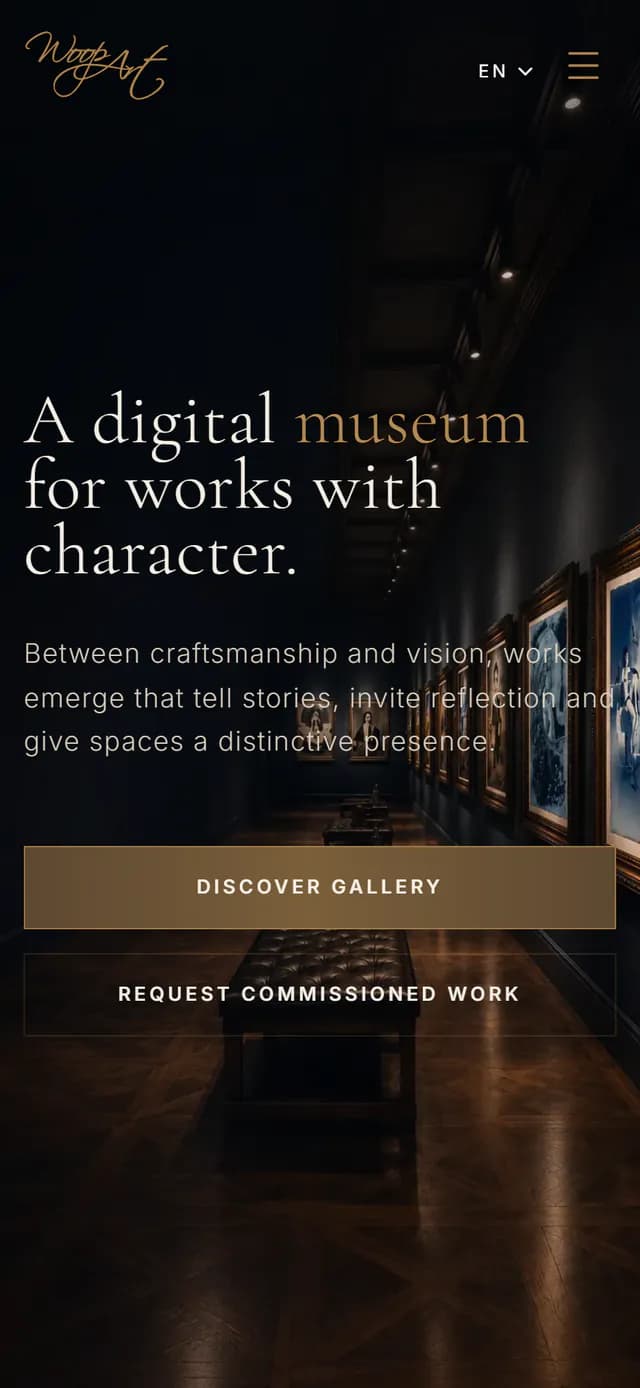
Woop Art gallery on a smartphone
Results at a glance

98 works. Two ways in. One shared structure.

98

digitally documented one-off works

214

indexable addresses

2

fully integrated languages

100 / 100

Lighthouse SEO

100 / 100

Lighthouse accessibility

0

Cumulative Layout Shift

The website comprises 107 addresses per language; 196 of the 214 URLs are generated automatically from the centrally managed artwork data. The Lighthouse figures come from the desktop measurement of 7 August 2026, which additionally reaches a performance score of 99 with a Largest Contentful Paint of 0.8 seconds.

01Starting point

A body of work that had grown needed more than a classic artist website

Ralph D. Woop's artistic work spans cyanotypes, pyrographies, portraits, commissioned pieces and experimental works with very different formats, stories and availabilities.

The challenge was therefore not simply to present images online.

The new website had to do all of the following at once

  • convey the atmosphere of the art
  • document an extensive body of work in a structured way
  • make individual works permanently discoverable
  • provide background information on techniques and projects
  • speak to an international audience
  • and guide interested visitors towards getting in touch

That led to the requirement for a digital presence that combines exhibition, catalogue raisonné and communication platform in a single system.

02Challenge

Staging art without losing discoverability and structure

An artwork behaves differently from a conventional product. Every work exists only once. Formats and proportions differ widely. Some pieces are available, others reserved, part of a private collection or simply not for sale.

An ordinary card grid would have flattened that diversity. A purely experimental gallery, on the other hand, would have created atmosphere but would only have been of limited use for targeted research, for search engines and for visitors with a specific work in mind.

The central question was therefore: how do you combine a digital gallery experience with a structured catalogue raisonné? The answer was not a single interface but two different ways into the same body of work.

03Concept & design

Explore or search deliberately – both lead to the same works

The information architecture was developed so that visitors can decide for themselves how they want to approach the work.

A digital exhibition instead of a classic portfolio

The visual design takes its cue from the atmosphere of a historic studio and a curated gallery space.

Dark blues and blacks create a calm background. Warm gold and light accents pick up the materials and colour moods of the works. Classic serif typography connects the digital interface with the aesthetics of an exhibition. The user interface deliberately steps back behind the art.

Differing formats remain part of the design

Landscape, portrait or unusual proportions are not forced into identical image containers. A dedicated layout logic was developed for the gallery that takes the actual aspect ratios of the works into account and builds balanced rows from them.

Images that are already visible stay stable when further works are loaded. Content is added row by row so that existing elements are not rescaled after the fact.

The exhibition space is built, not photographed

The museum wall is not a background image. Wall, skirting board, parquet floor, ceiling spotlights and the frame around every work are drawn in the browser – from gradients, shadows, cones of light and a few material textures. A photograph would have shown the same room, but only ever that one: fixed lighting, fixed frame colour, fixed picture size.

Because every layer is made of design values, every layer stays changeable. A lighter wall, a different wood, an additional spotlight or a narrower mount is a change to a single value in the code – no new rendering, no new photo shoot. The room grows with the collection instead of forcing it into an image settled once and for all.

So that this stage set does not make every movement expensive during horizontal scrolling, it is drawn once per screen size onto a canvas and placed behind the works as a finished image. The works themselves remain individual elements in the foreground – clickable, linkable, with their real image data. When the window size changes, the room is drawn again; while scrolling, the browser moves only a single layer.

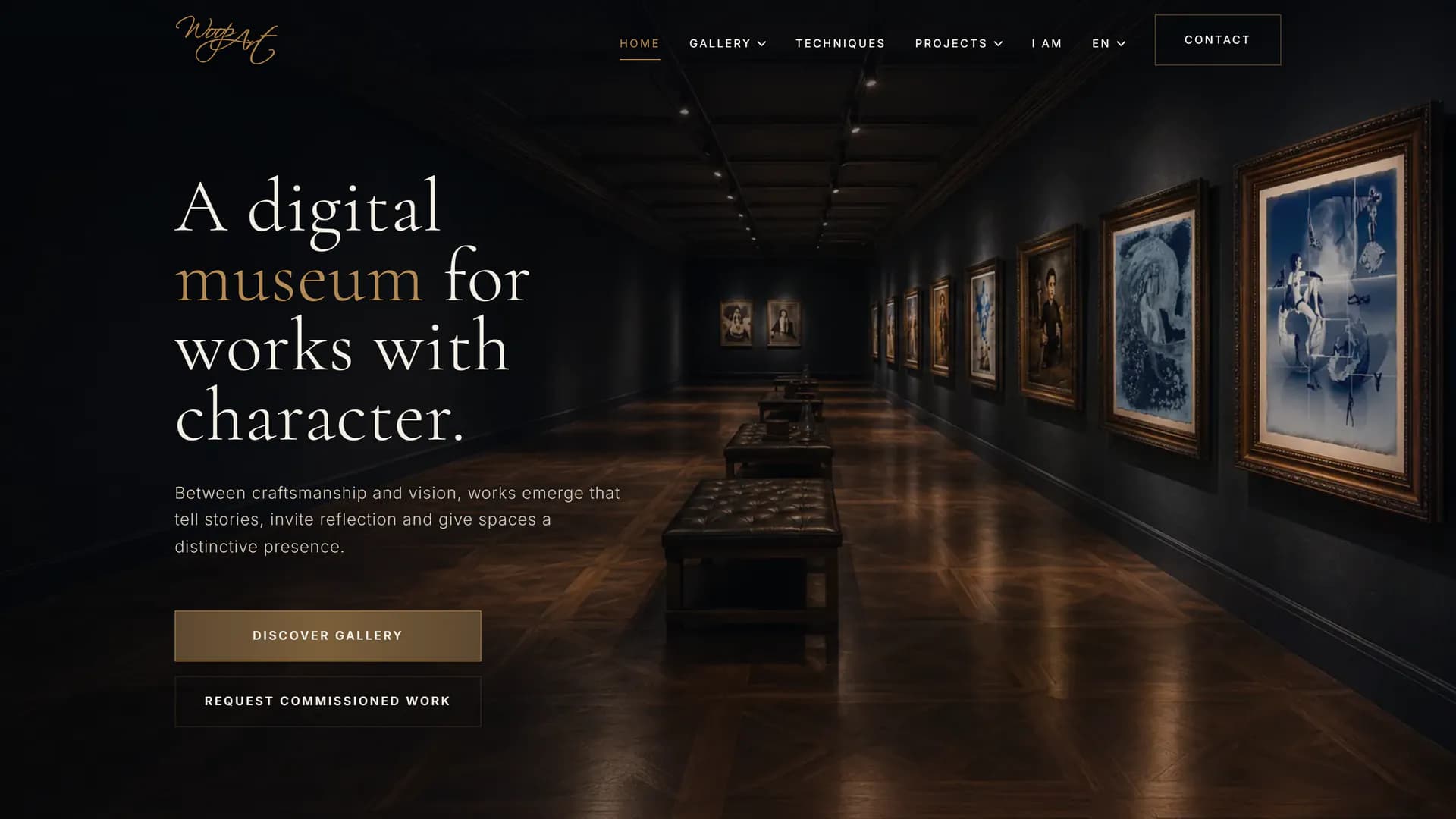
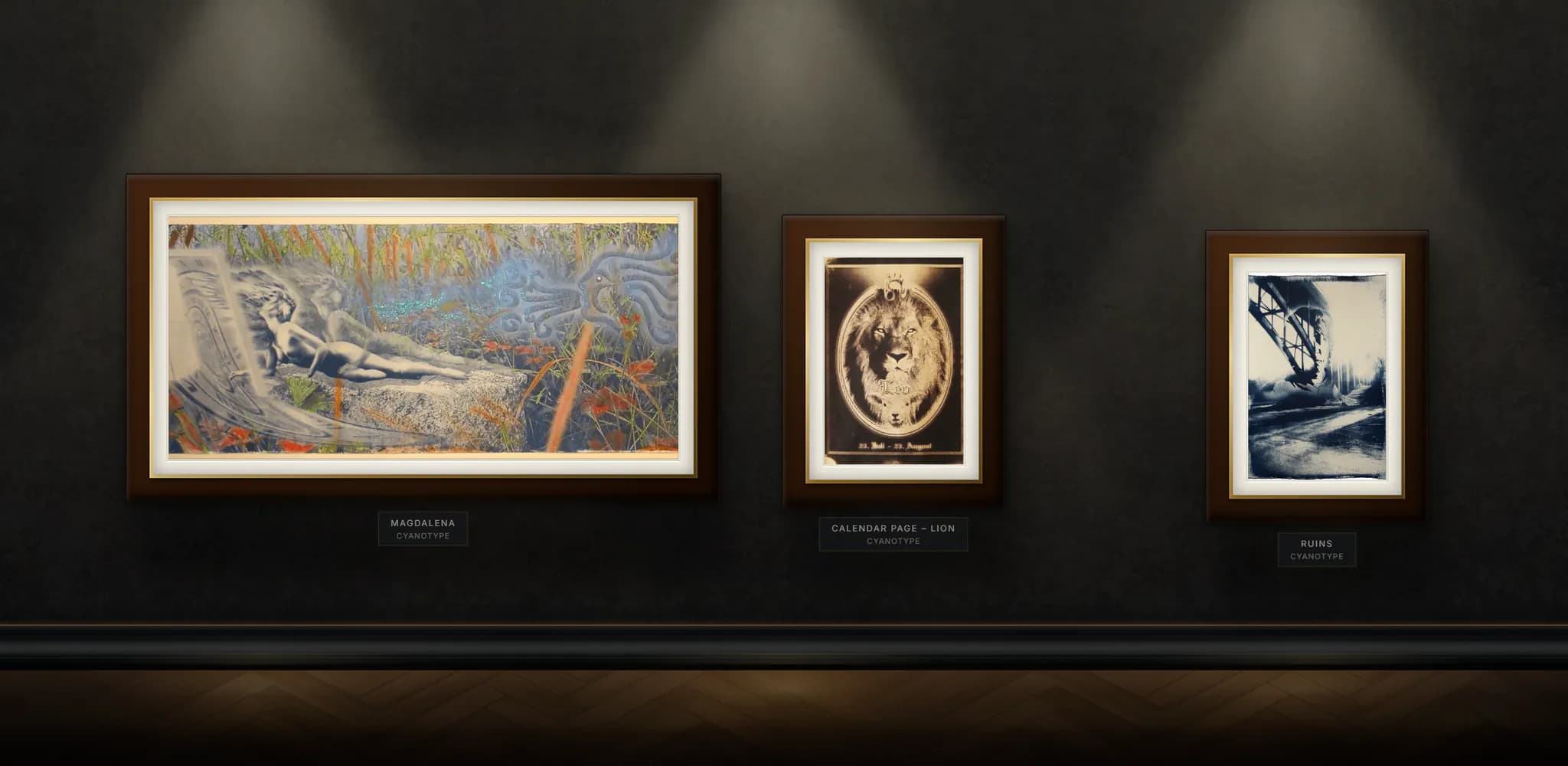
The horizontal museum wall: visitors move sideways through the exhibition while the works keep their actual aspect ratios.

The gallery as an experience

The digital gallery translates elements of a classic exhibition space into the browser. On larger screens visitors move horizontally along a virtual museum wall. Different image formats keep their actual proportions and are shown within a spatially staged environment. Wall textures, mounts, lighting and restrained spatial elements provide a frame without competing with the artworks. What comes first is not the information but the visual discovery.

The catalogue as a structured way in

Anyone looking for a specific work, or wanting to search the collection deliberately, reaches the relevant information directly through the catalogue. For each work it clearly shows the preview image, title, year of creation, work number, technique and availability status, among other details.

The complete catalogue is served server-side and therefore stays clearly structured, directly accessible and readable by search engines, independently of the interactive gallery experience.

Woop Art digital gallery on desktop
The desktop gallery: wall textures, mounts and lighting frame the works without competing with them.
The mobile home page at full length: vertical guidance, its own image arrangement, the same visual language as on the desktop.

Mobile is not simply desktop made narrow

The desktop gallery was deliberately not shrunk down for smaller displays. Mobile devices got an interaction concept of their own:

Desktop

  • horizontal, scroll-driven museum wall
  • generous spatial staging
  • dedicated desktop imagery

Mobile

  • vertical user flow
  • dedicated image arrangement for narrow displays
  • dedicated, differently cropped imagery

The design identity is preserved while the interaction is adapted to the device at hand.

The layers the room is made of

  • wall gradient with material texture
  • skirting board built from several profiles and their shadow edges
  • parquet floor with varnish and grain layers
  • three ceiling spotlights with cone and ambient light
  • light reflections on the floor beneath each spotlight
  • wooden frame, gold rim and passe-partout around every work

Each of these layers is a design value in code – colour, width, opacity, count. The exhibition can be rehung and relit at any time without producing a single new image.

04Artwork data

Every work receives a unique digital identity

The central foundation of the website is not the page title but the work number. A work keeps its identity regardless of whether its title or its URL changes later on. Translations, recommendations, gallery positions and other links therefore stay reliably connected.

Example of a work number

  • RDW-CYA-002

The work number itself also becomes a digital entry point. Anyone who finds a work number on a physical piece, in documentation or on a certificate can use it as an address. The system automatically forwards to the canonical artwork page.

This creates a direct connection between the physical artwork and the digital catalogue without producing additional competing URLs for search engines.

A new work is added once – the rest is generated automatically

All relevant artwork data is managed centrally.

From it, the following are generated automatically

  • artwork detail page
  • catalogue entry
  • presentation in the gallery
  • German and English content
  • metadata
  • sitemap entry
  • structured data
  • internal links
  • redirects

Of the website's 214 indexable addresses, 196 are generated this way from the artwork data.

Data errors are caught before they go live

Work numbers, translations and other artwork-related structures are typed against each other. If a translation is missing or a work number is misspelled, the automated build fails instead of quietly pushing incomplete content to the live website. This check runs automatically on every push and pull request.

The collection grows without the complexity growing with it

Artwork page, catalogue entry, gallery position, metadata, sitemap entry and redirects all come from the same source. One more artwork is therefore one more record – no new page, no new route and no second place where the same detail has to be maintained.

05Artwork pages & enquiries

From the first impression to the complete artwork documentation

Every work has a detail page of its own, where visual presentation and structured information come together.

Depending on the work, the following can be shown

  • title
  • artist
  • year
  • technique
  • material
  • dimensions
  • type of work
  • series
  • work number
  • availability
  • description
  • related works
  • direct way to get in touch

Visitors can also move between the previous and next work. The order follows the curated gallery rather than the order in a database.

Discovering similar works on purpose

A dedicated recommendation logic was developed for related works. Among other things, it takes into account:

  • series
  • motif
  • technique
  • composition
  • colour impact
  • mood
  • type of reference

Eight weighted characteristics are considered in total. The recommendation can additionally explain to visitors why another work was classified as similar. Discovery therefore does not end on a single detail page but leads on thematically through the collection.

Not every artwork has to be purchasable online

Woop Art was deliberately not built as an online shop. The focus is on communicating art, documenting the work and personal contact.

The call to action therefore adapts to the status of the work in question.

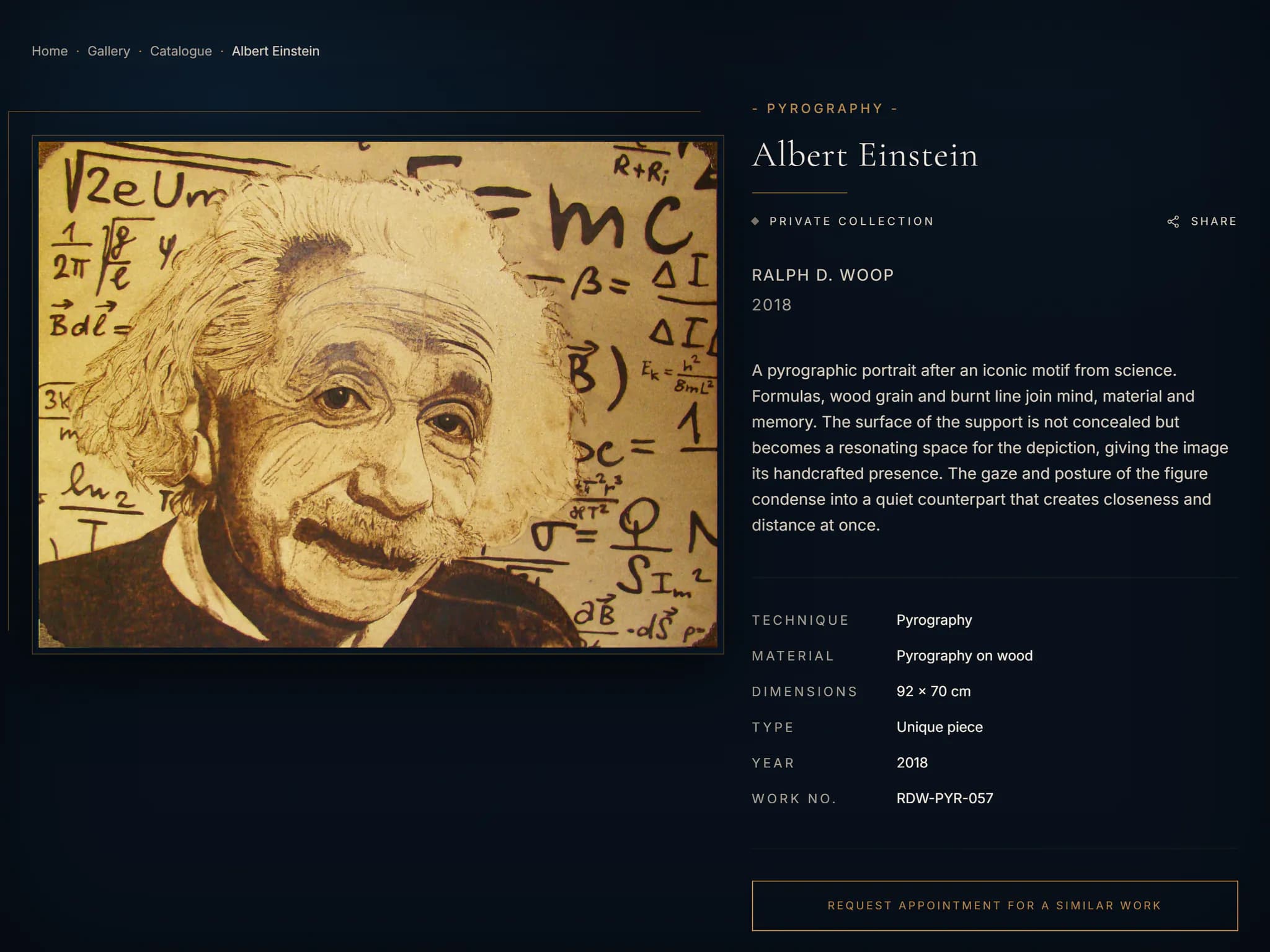
Woop Art artwork detail page on desktop
Artwork detail page: large-format image display, structured artwork data and an enquiry that carries the reference to the work with it.
Four availabilities, two paths

Enquire about this work

Applies to
  • On request
  • Reserved

The work can still change hands – it is available or on hold for someone. The button therefore leads to an enquiry about this particular work.

Request an appointment for a similar work

Applies to
  • Private collection
  • Not for sale

The work is privately owned or not for sale. An enquiry about it would come to nothing – so the button leads not to the work but to a conversation about a comparable one.

The enquiry starts on the artwork page itself. The title or work number and the type of enquiry are carried along – visitors do not have to copy them out.

06Findability

Not just the website but every single work should be understandable

A key requirement was to make individual artworks permanently discoverable and technically unambiguous to describe.

For this the website uses six different Schema.org types

  • Person
  • WebSite
  • BreadcrumbList
  • VisualArtwork
  • CollectionPage
  • CreativeWork

All 98 artwork pages are marked up as VisualArtwork and enriched with information such as technique, material, work number and dimensions. Stable entity links connect artwork, artist and website.

Price and offer markup was deliberately left out, because Woop Art is a gallery and not a conventional online shop.

German and English – all the way into the URL structure

Multilingualism was not solved merely through translated visible text. All 98 works are fully maintained in German and English. In total that amounts to 196 artwork records with 1,372 completed translated text fields.

The URLs are language-specific too

  • /de/werkverzeichnis/knechtschaft
  • /en/catalogue/servitude

Canonical, hreflang and x-default links ensure that search engines connect the language versions correctly. Multilingualism is therefore not treated as an add-on but as part of the fundamental information architecture.

214 addresses – automatically in the sitemap

The sitemap is generated automatically from the actual set of pages and works and currently covers 214 addresses. For every URL it maintains, among other things, language alternatives, date of last update, priority and canonical assignment.

The change date follows the actual state of the content rather than merely the time of the last deployment. This avoids every technical release wrongly signalling that all content has been updated.

07Technology & operations

Independent operation, built-in data protection, accessible interface

A bespoke application without platform dependency

Woop Art was developed as a custom web application based on Next.js, React and TypeScript. The application ships as a standalone container and is therefore not tied to a particular website platform or a single hosting provider.

Technical operation includes

  • multi-stage Docker build
  • automated type and build checks
  • versioned container images
  • private package registry
  • controlled releases
  • ongoing technical support

Every published version can be deployed reproducibly or rolled back to a previous state if needed.

Email delivery for contact enquiries also runs through a central infrastructure using Amazon SES.

Handover, source code and exit

We build the interface of every project in its own repository. Woop Art can therefore be handed over as a self-contained source code state, without parts of other projects coming along.

  • Source code of the website at the client's request
  • Usage rights to the Woop packages in use, at the version the website runs on
  • Delivered as a standalone container – changing provider presupposes no particular platform
  • Deletion of the client's data 30 days after handover or the end of the contract

This describes what is provided for. What applies in an individual case is set out in the respective contract.

Data protection was built into the application

Consent management is also based on our own reusable Woop Technology component. For Woop Art the configuration comprises:

3

consent categories

4

services

7

declared cookies

2

languages: German and English

Changes to the consent configuration are versioned and can trigger a new decision by the visitor.

Google Consent Mode v2 is initialised with denied states by default. Analytics is only loaded once the corresponding consent has been given. Consent decisions are logged server-side with a timestamp, the consent version and an anonymised IP address.

Design does not end at the visible interface

The website also takes into account users who work with screen readers, reduced motion or zoom.

Among the things implemented

  • bilingual screen reader text
  • editorial alt text for all 98 artworks
  • semantic HTML
  • accessible form labels
  • prefers-reduced-motion
  • pinch-to-zoom left enabled
  • navigable artwork structures even without JavaScript

On an art website in particular we deliberately did not restrict zooming on mobile devices – visitors should be able to look at works enlarged.

No formal WCAG conformance audit was carried out; we therefore make no certification or conformance claims.

08Result

A body of work became a digital system

Today Woop Art is not just a website with pictures. What emerged is a digital art space that brings different requirements together:

Experience

An atmospheric gallery for visual discovery.

Structure

A complete digital catalogue raisonné.

Context

Dedicated artwork, technique, project and artist pages.

Discoverability

214 indexable addresses with a multilingual SEO structure.

Conversion

Work-specific enquiries instead of anonymous contact forms.

Extensibility

New works are added centrally and integrated into the existing structure automatically.

The digital presence can therefore keep growing alongside the artistic work – without needing a new technical solution for every new artwork.

Measured quality · Lighthouse desktop
99

Performance

100

Accessibility

96

Best Practices

100

SEO

  • 0.5 s First Contentful Paint
  • 0.8 s Largest Contentful Paint
  • 0 Cumulative Layout Shift

The values come from the current Lighthouse desktop measurement of 7 August 2026.

Portfolio

More projects

  • Service of our ownPrivacyArchitecture
    Technical module

    Consent management

    Our own consent engine. It manages consent, unlocks consent-dependent services and cleans up cookies on withdrawal – while data, languages and design stay freely configurable per project.

    Interface
    Banner and settings in the project's own design
    Consent engine
    State, versioning, registry, gating
    Data source
    JSON, API or CMS – interchangeable
  • UX/UI designWeb developmentMultilingualBooking & payment

    Ciklusfit — Cintia Németh

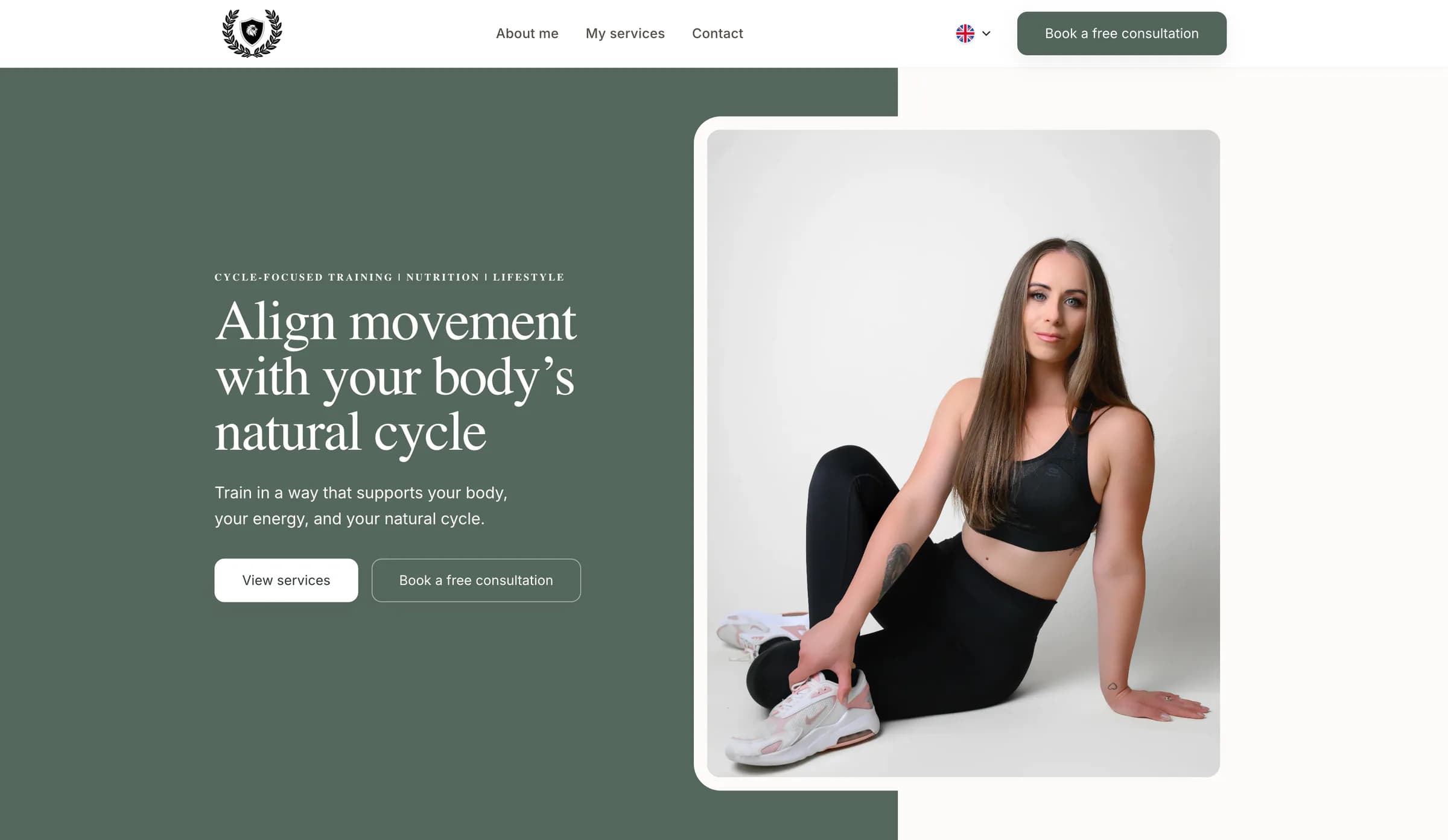
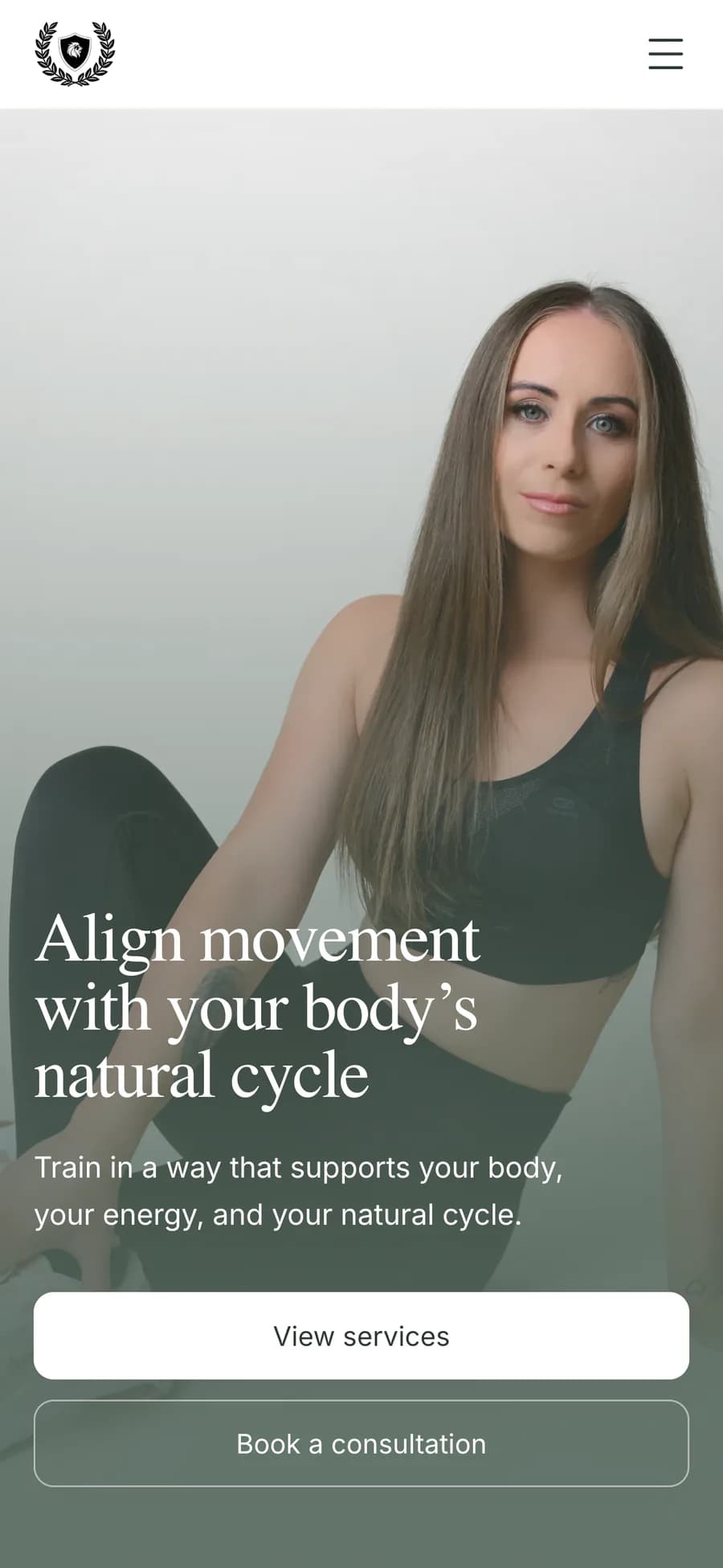
    A clearly structured platform for cycle-based training, nutrition and lifestyle coaching – with offer comparison, appointment requests and booking.

    Ciklusfit — Cintia Németh
    Ciklusfit — Cintia Németh